

1. Introduction: Understanding Google Ads Attribution
Every digital marketer dreams of knowing exactly which ad or keyword truly drives conversions. That’s where the Google Ads Attribution Model comes in. An attribution model determines how credit for conversions is assigned across different touchpoints in a customer’s journey. Whether a user clicks your ad first, last, or interacts multiple times before purchasing — each moment matters.
But the real question is:
👉 Which Google Ads Attribution Model is best for your business objective?
Let’s explore every model, its pros and cons, and help you choose the right one based on your marketing goals.
2. What is a Google Ads Attribution Model?
In simple words, a Google Ads Attribution Model tells you which ad interaction gets credit for a conversion. Imagine a user searches for your product, clicks an ad, explores your website, and later clicks another ad before purchasing. The way you assign credit to those ads defines your attribution model.
It’s not just a reporting method — it’s a strategy that impacts optimization, bidding, and budget allocation.

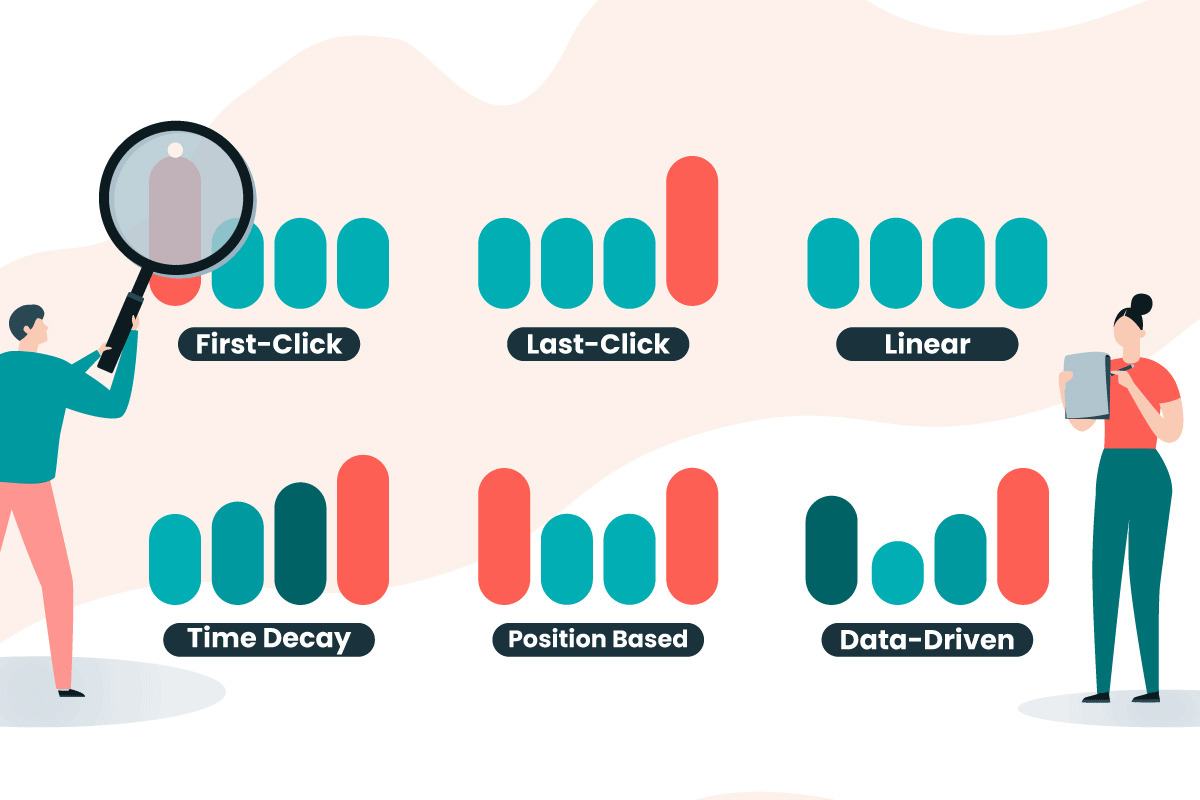
3. Why Attribution Models Matter in Google Ads
Understanding attribution is essential for accurate decision-making. Without it, marketers risk spending money on the wrong keywords or campaigns.
Here’s why it matters:
- Helps identify high-performing ads and keywords.
- Provides real conversion data instead of assumptions.
- Guides budget allocation toward the most effective campaigns.
- Improves ROI through data-driven attribution.
So, choosing the best Google Ads attribution model ensures your business objectives align with how you measure success.
4. Types of Google Ads Attribution Models
Let’s explore each Google Ads Attribution Model in detail and understand when to use them.
1️⃣ Last Click Attribution
Definition: Gives 100% credit to the last ad clicked before the conversion.
Best for: Businesses focusing on direct sales or final purchase triggers.
Pros:
- Simple and easy to understand.
- Shows which ads close the deal.
Cons:
- Ignores earlier interactions.
- Not suitable for long customer journeys.
3️⃣ Linear Attribution
Definition: Distributes credit equally across all touchpoints.
Best for: Businesses that value every stage of the customer journey.
Pros:
- Balanced approach.
- Suitable for omnichannel strategies.
Cons:
- Doesn’t identify which touchpoint had the strongest impact.
5️⃣ Position-Based Attribution (U-Shape Model)
Definition: Assigns 40% credit to both first and last clicks, and divides 20% among the middle interactions.
Best for: Businesses balancing awareness and conversion campaigns.
Pros:
- Highlights both introduction and conversion touchpoints.
- Ideal for multi-stage funnels.
Cons:
- May oversimplify complex journeys.
2️⃣ First Click Attribution
Definition: Gives full credit to the first ad the customer clicked.
Best for: Awareness campaigns and lead generation.
Pros:
- Shows which ads introduce your brand.
- Great for measuring initial engagement.
Cons:
- Ignores the influence of later ads that convert.
4️⃣ Time Decay Attribution
Definition: Gives more credit to interactions that happened closer to the conversion.
Best for: Short sales cycles and time-sensitive offers.
Pros:
- Recognizes recency.
- Useful for remarketing campaigns.
Cons:
- Early interactions get undervalued.
6️⃣ Data-Driven Attribution (DDA)
Definition: Uses machine learning to assign credit based on actual data performance.
Best for: Businesses with sufficient conversion data and varied ad types.
Pros:
- Most accurate and intelligent.
- Learns from user behavior patterns.
- Improves over time automatically.
Cons:
- Requires enough data to function effectively.
- May not be available for new advertisers.
5. Google Ads Attribution Model Comparison Table
| Model | Credit Distribution | Best For | Accuracy Level |
| Last Click | 100% to last interaction | Direct sales | ⭐⭐ |
| First Click | 100% to first interaction | Awareness | ⭐⭐ |
| Linear | Equal credit to all | Balanced strategy | ⭐⭐⭐ |
| Time Decay | More credit to recent clicks | Retargeting | ⭐⭐⭐ |
| Position-Based | 40%-20%-40% | Multi-stage journeys | ⭐⭐⭐⭐ |
| Data-Driven | Based on actual data | Advanced advertisers | ⭐⭐⭐⭐⭐ |
6. Choosing the Right Attribution Model for Your Business Objective
Every business objective demands a different Google Ads Attribution Model. Let’s match them:
| Business Objective | Recommended Attribution Model | Why |
| Brand Awareness | First Click | Focuses on initial engagement. |
| Lead Generation | Position-Based | Balances awareness and conversions. |
| E-Commerce Sales | Data-Driven | Optimizes based on real performance. |
| Remarketing Campaigns | Time Decay | Credits recent interactions more. |
| Conversion Optimization | Linear or DDA | Ensures fair value to all touchpoints. |
7. How to Change or Test Attribution Models in Google Ads
You can easily compare attribution models in your Google Ads dashboard:
- Log in to your Google Ads account.
- Go to Tools & Settings → Measurement → Attribution.
- Select Attribution Models and compare performance metrics.
- Use the Model Comparison Report to test before applying.
- Analyze which model aligns best with your campaign objectives.
Testing different types of Google Ads attribution models helps you identify what delivers the highest ROI.
8. Expert Tips for Better Attribution Strategy
💡 1. Start with Data-Driven Attribution (if available):
It’s the most accurate and evolves with your campaign data.
💡 2. Align Attribution Model with Funnel Stage:
Awareness → First Click
Consideration → Position-Based
Conversion → Last Click or DDA
💡 3. Combine with Conversion Tracking:
Integrate Google Ads Conversion Tracking to ensure accurate data.
💡 4. Analyze Regularly:
Review performance every month and adjust your model if results shift.
💡 5. Use Google Analytics 4 (GA4):
Combine Ads + Analytics data for deeper attribution insights.
9. Common Mistakes to Avoid
🚫 Choosing a model blindly without data.
🚫 Using Last Click for all campaigns (it’s outdated for most).
🚫 Ignoring early or mid-funnel contributions.
🚫 Not revisiting your model regularly as business goals evolve.
10. Conclusion: So, Which Google Ads Attribution Model is Best?
There’s no “one-size-fits-all” answer — the best Google Ads Attribution Model depends on your business objective and customer journey.
- If you focus on brand awareness, use First Click.
- For balanced performance, go with Position-Based.
- For data-driven optimization, DDA (Data-Driven Attribution) is the ultimate choice.
At the end of the day, the right attribution model helps you spend smarter, optimize campaigns effectively, and understand what truly drives conversions.
FAQ on Google Ads Attribution Models
1. What is a Google Ads Attribution Model?
A Google Ads Attribution Model defines how conversion credit is assigned to different ad interactions in a customer’s journey. It helps advertisers understand which touchpoints — first, last, or in-between — contributed most to a conversion.
2. Why are attribution models important in Google Ads?
Attribution models are crucial because they help you measure ad performance accurately. By knowing which ads or keywords contribute to conversions, you can optimize bids, allocate budget effectively, and improve ROI.
3. What are the main types of Google Ads Attribution Models?
The six main types are:
-
Last Click
-
First Click
-
Linear
-
Time Decay
-
Position-Based (U-Shape)
-
Data-Driven Attribution (DDA)
Each model assigns conversion credit differently based on user behavior.
4. Which Google Ads Attribution Model is best for small businesses?
For small businesses with limited data, the Position-Based Attribution Model works best. It highlights both the first and last interactions, giving a balanced view of awareness and conversions.
5. What is the most accurate attribution model in Google Ads?
The Data-Driven Attribution (DDA) model is the most accurate. It uses machine learning to analyze your account’s performance data and assign credit based on what truly drives conversions.
6. Can I switch between different attribution models in Google Ads?
Yes. You can easily test and switch between attribution models using the Model Comparison Tool in Google Ads. It’s recommended to compare results before permanently changing your model.
7. How do I choose the right attribution model for my campaign?
Choose a model based on your business objective:
-
Awareness → First Click
-
Consideration → Position-Based
-
Sales or Conversions → Data-Driven
-
Remarketing → Time Decay
8. Does Data-Driven Attribution require a certain amount of data?
Yes. Google requires a minimum number of conversions before enabling Data-Driven Attribution. This ensures the model has enough data to analyze patterns and deliver accurate results.